


Interview with Prime Minister Najib Mikati of Lebanon
Monday, Feb 18, 2013
Hürriyet Daily News (Turkey)
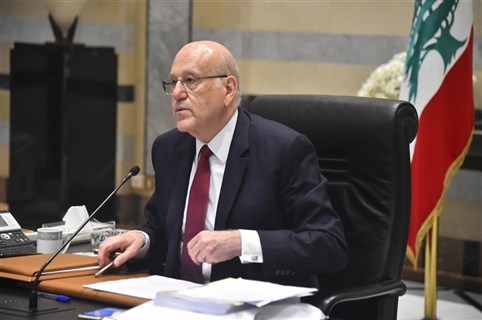
We met with Prime Minister Najib Mikati of Lebanon who had visited Ankara two weeks ago at the Grand Serial that was once known to be an Ottoman Palace in the heart of Beirut; Hurriyat discusses with Prime Minister Mikati the political and economic challenges facing Lebanon.
The main theme of interview is the Syrian crisis and its implication on Lebanon. Syria had a direct influence on Lebanon during and after the civil war. Prime Minister Najib Mikati discussed his Government’s neutral position towards the Syrian crisis stressing on the importance of this dis-association policy that prevents strife and Syrian crisis spillover to Lebanon.
Prime Minsiter Mikati said that Prime Minister Erdogen understands the Lebanese government’s position towards Syria due to the internal divisions in Lebanon associated with the Syrian crisis.
According to Prime Minister Mikati, Turkey is a powerful force in the Middle East, but it is difficult for Turkey to be a model for other countries.
In an exclusive interview with Huriyat Turkish Newspaper, Prime Minister Mikati discusses the Turkish-Lebanese relations, Syrian crisis and the political challenges he is facing.
What were the main topics that you discussed with Turkish PM Erdoğan in your recent visit to Ankara?
My visit to Turkey was successful. I had a productive meeting with Prime Minister Erdogan where we have discussed bilateral cooperation and Turkey’s support for Lebanon in the international scene.
We also raised the issue of the displaced Syrians and the challenges that Lebanon is facing due to the increased flow of Syrian migrants, which is burdening Lebanon at all levels; geographic, social, political and economic. Our case is unique due to its complexity and we called upon Turkey and the international community to help in alleviating the agonies of the Syrian displaced migrants.
Furthermore, we discussed thoroughly the issue of the Lebanese hostages in Syria, which is a major concern to us as most Lebanese believe that Turkey can play a major role in liberating the hostages.
How did the Turkish side respond to your request for putting pressure on groups that are allegedly involved in kidnapping of Lebanese nationals in Azez (Syria)?
Irrespective of the complexity of the situation in Syria, and from day one, Turkey has cooperated with Lebanon on this issue and reaffirmed to me that they will do their best to help in liberating the hostages.
What do you make of the blast that targeted General Wissam El Hassan, a major security officer, in your capital last October? Do you agree with the arguments that it had to do with different political stances towards Syria?
We denounced this horrific crime. This crime targeted a major security General and my personal friend General Wissam El Hassan. General Hassan played a vital role in preserving security in Lebanon. Since, we have taken measures such as requesting an international inquiry into this crime.
The ongoing strife in Syria leads to believe that the assassination could be a consequence, but, since there is no clear evidence yet we are awaiting the results of the investigation.
Can Turkey act as a role model for change in the Arab world?
Growth and development experienced by Turkey over the last 10 years is obvious, the same thing can be said regarding Turkey's military power. Turkey is playing a significant role in the region. As for whether it can act as role model in the region, I personally do not think so since I do not believe in standardization, for each country has its own characteristics. In Turkey, civil law is widespread which makes it really difficult for us to adopt the Turkish model.
Do you mean secularism and pertaining laws?
Yes. Regarding that issue, we need more time; we cannot adopt secularism immediately.
There has been recently talks about fundamentalists’ actions and influence in the north. Is "al-Qaeda" really influential in Lebanon?
"Al-Qaeda" has become a general denomination to such activities. These factions may not be linked with "Al-Qaeda" whatsoever, and may be they are just “al-Qaeda” sympathizers, but in Lebanon, we are accustomed to such situations that arise from pluralism and that we have the capacity to deal with. But the situation has nothing to do with “Al-Qaeda” and terrorism.
What about the situation on the Syrian-Turkish border? It is said that the “Al-Nosra” faction that is close to “Al-Qaeda” has a significant presence there, do you have information in this regard?
As you have mentioned, these factions are present in northern Syria.
Do you fear that the sectarian clash patterns in Syria might also infect Lebanon which has already suffered a lot from similar clashes in the past?
Because of the political, historical, and geographic connection between Lebanon and Syria, and the deep polarization of the Lebanese between those who support the Syrian uprising and those who support the Syrian regime, we adopted a dis-association policy that aims to safeguard Lebanon from the overspill of the Syrian crisis. Irrespective of our attempts, the consequences of the Syrian crisis have impacted Lebanon mainly with more than 200,000 Syrians fleeing the violence into Lebanon. This forced migration can result in many challenges including political divisions and sectarian tension.
What is your government’s take on the situation as a whole in Syria?
We are saddened by the violence that is claiming hundreds of innocent lives each day in Syria. Lebanon reaffirms its dis-association policy on both the political and security levels in order to maintain stability and avoid related consequences and risks. Hence, I always stated that Lebanon did not dis-associate itself from providing humanitarian support to the Syrian refugees in Lebanon in an attempt to alleviate their sufferings.
We hope that the Syrian crisis will be resolved peacefully.
Do you believe a formula which keeps Bashar Assad as part of the solution might work in Syria?
Our dis-association policy towrads the ongoing crisiss Syria, requires that we don’t interfere in the internal affairs of any country and especially that we as Lebanese always been complaining about regional and international interference in our affairs. The answer to this question has to be determined by the Syrian People.
What are your expectations from US President Obama in the second term? Do you believe that he has delivered upon expectations from Islamic world in his first term?
We hope that President Obama’s perspective on Arab issues is fundamentally based on preserving peace and justice in the region mainly by ensuring the establishment of a Palestinian State and granting the Palestinians the right of return to their land. In addition to this main concern, we hope that President Obama’s administration will deter Israel from its aggressions against the Arab States specifically Lebanon and the Palestinian Territories.
We believe that President Obama’s perspective and his Administration’s’ policy is based on a proper understanding towards the Islamic World. We hope such understanding to be visible in action.
How do you rate the Turkish position in the Syrian crisis?
I am not in a position to evaluate the Turkish stand on this issue. The Turkish officials know better Turkey’s interest and accordingly how to deal with the Syrian case. However, there is no doubt that Turkey is a major player and pivotal power in the region.
There is an obvious difference between Turkey’s and Lebanon’s stance towards the Syrian issue. While you do not support any of the parties, Turkey gives support to Syrian dissidents. Will this affect bilateral relations?
Mr. Erdogan made it clear during the meetings we had, that he was convinced with Lebanon’s policy, for he was aware of the Lebanon’s social structure and how difficult it is for Lebanon in these circumstances to support any particular party in Syria. Our historical and geographical relations with Syria and divisions in our society compel us to adopt neutrality. The government’s support to any of the parties will only deepen the divisions in our country and will not serve any of the parties in Syria even if all Lebanese support the Syrian regime or the opposition. Supporting any of the parties would only further destabilize our society.
What are the conditions of the Syrian refugees in Lebanon? Have you agreed on any means of cooperation on this matter with Turkey?
Our Government is committed to support, within its capacities, the displaced Syrian families awaiting their return to their homes. That goes along acknowledging the right of the Lebanese hosting communities for adequate social services. However, these capacities have reached a deadlock and immediate assistance is needed. With the escalation of violence, massive influx of displaced is expected and that requires extensive resources.
The situation has reached an alarming level that Lebanon cannot handle on its own. Therefore our Government designed a response plan which looks at sustaining the adequate provision of shelter, food and basic commodities in addition to health care and education services of displaced Syrians. Moreover, the plan will assist Lebanese hosting communities to preserve social cohesion, solidarity and prevent conflict and tension.
A such, we have discussed with Turkish counter partners the complexity of the situation and the urgent need for International support in order for Lebanon to be able to sustain its assistance to displaced Syrians and maintain its internal stability and peace.
There has been recent talks about a possible Sunni -Shiite conflict.
Will the current controversy turn into a widespread conflict?
This situation started a long time ago, since the occupation of Iraq and even in the eighties during the Iraqi-Iranian war. Wise statesmen are striving to prevent such a conflict, and I hope they will succeed. We, as true Muslims, have transcend Sunni - Shiite divisions and oppose using this issue as an excuse for a conflict.
Do you think it will be possible to keep Iraq unified under current circumstances?
We very much hope that the Iraqis will overcome the ongoing deteriorating situation by maintaining at the minimum level their national solidarity. We hope that such solidarity will crystallize more and more over time since stability in Iraq will positively affect the whole region.
How do you think the developments in Syria and Egypt will affect the Israeli position in the region? Do you think Israel is stronger or weaker than years ago?
Any unfortunate incident and crisis that happens in the Arab world provides an opportunity for Israel to intervene and benefit from the chaos. Therefore, we in Lebanon have been calling for resolving our Arab issues as quickly as possible so as to strengthen our defenses from any hazards.
How do you think the Turkish stance towards Israel is affecting the balances in the region?
Again, I am not in a position to evaluate the Turkish stand towards Israel. This is to be determined by the Turkish Officials.
What do you make of the uprisings of the last two years? Do you believe Islamic countries are undergoing a healthy reform process?
It’s too early to discuss and evaluate the consequences of the uprisings. Such transitions need a long time to materialize into any positive change. However, the positive aspect is the increasing participation of the youth in the shaping of the Arab World.


